SERIES 2: THE SENSORY MOTOR FOUNDATIONS - SELF STUDY
This self paced course consists of 5 topics, each with a webinar, workbook and a quiz at the end to earn you PD certificate. You will have access to the Series for 60 days.

In this first webinar on the Sensory Motor Foundations to Learning, we explore POSTURE/ Postural control/ postural security.
Kerry will guide you through an exploration of the sensory contributions to posture, as well as functions and dysfunctions of posture/poor posture.
You will discover how to assess the impact of the child's posture on their learning and other functions like eating and toileting, digging deeper to explore which sensory areas are contributing to this. From here you will learn about structuring an intervention from the sensory levels up (bottom-up) and the contribution of working top-down as well. All this within the framework of a child-centred and relational approach, collaborating with families within the child's own environment.

Body awareness/ body scheme/ body percept - lots of terms for similar concepts. In this sensory exploration, we look at where the sense of our physical self comes from, why it's crucial to our development and what to do when you assess this to be under-developed in the child you are seeing.
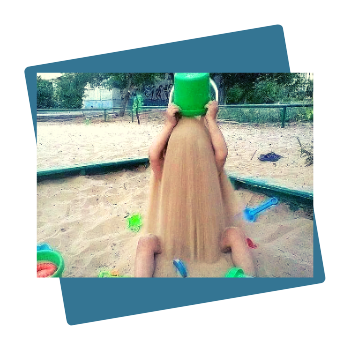
The word 'immersion' always comes to mind when I think about body awareness and as in this picture of a child immersing himself in the tactile sensation of sand, you will learn how to provide these immersive experiences to children in appropriate ways for their age, stage and environment.
Bilateral Integration, Midline Crossing and Laterality.

This is one of my favourite topics - although I admit to having several! The awareness of the two sides of your body coupled with an internal sense of your central midline axis is absolutely crucial for learning.
Successful integration of the senses from Series 1, lays the groundwork for these skills to start emerging from the second month of life. A poorly integrated sensory foundation that impacts this crucial skill has implications for the child's academics, gross and fine motor skills and social-emotional development. I will give you a clue: reversals when writing and poor spatial planning on the page.
There are many 'layers' to bilateral integration, midline crossing and laterality which develop and integrate in the background of sound sensory integration over many years coming to full maturity around the 7th year of life. Discover the neuroscience, hierarchy of development and your role in assessment and intervention to ensure the children on your caseload develop this crucial skill.

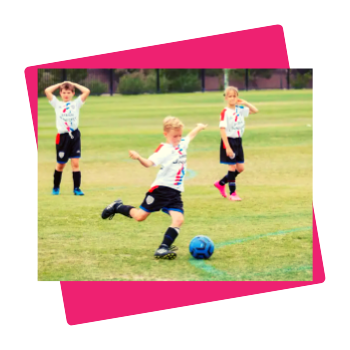
Picture this: you are playing in a soccer game, running forward and you see the ball travelling towards you - you need to meet the ball at the right time and in the right space to be able to connect it with your foot, and kick it in the right direction with the just-right force to send it where you planned (executive planning) to.
This entire task requires ideation, motor planning, execution and monitoring to ensure success.
The biggest reason why primary aged children avoid team sports, particularly soccer, basketball and hockey, is that the constant motor planning requirment is just too high.
Motor Planning is something you have to do every time you encounter something new - from a new sound you have to produce, to a new action, new social scenario and new task at school. our brains are constantly learning new things, storing them in our memories to use next time, strengthening connections, until this 'new' thing is more effortless and requires less thought. For a child with poor sensory integration, this is a process that seldom becomes effortless and they may prefer things to stay the SAME. Change is hard for everyone but particularly for this child.
Make sure you are fresh and ready to learn when you tackle this webinar :)

Modulation = harmony = regulation. The holy grail. This is a big topic, one into which we will delve a bit deeper in the Series 4 Behaviour presentation.
This presentation explores modulation at its most basic cellular level and extrapolates it up the levels/hierarchy to self-regulation. Theories by Stuart Shanker, Dan Siegal and Steven Porges are discussed, and the applications to OT are explored. The implications for our sensory children are discussed as is a discussion about how much regulation/modulation we can expect from a sensory child. Every child is different though!
Assessment of how the child's unique sensory profile either supports their modulation or not and how you can intervene in the context of the child's unique nervous system, using sensory integration theory and practice. An exciting webinar for sure!