
SERIES 1: THE SENSORY FOUNDATIONS TO LEARNING - Self Study
Start your SenseUp Journey with an introduction to ASI as a theoretical construct before taking a deep dive into each sensory system.
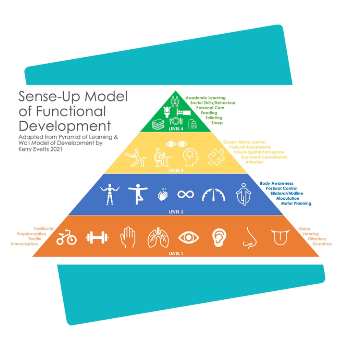
In this initial introduction, both to SenseUp and to Ayres Sensory Integration, Kerry gives you some contextual and baseline information that will help orient you within the theoretical framework that you will be learning about.
Kerry will introduce her SenseUP model of Functional Development around which her courses have been designed and written. She will take you on a journey from the 'bottom up' explaining how early sensory integration at foundational levels form the foundation for all future learning.
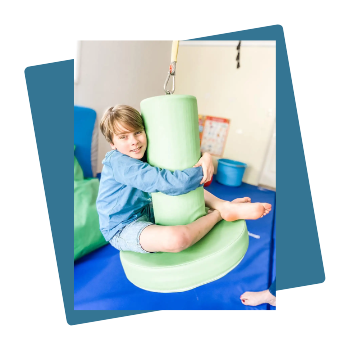 The Vestibular System is our balance and motion sense that orientates us into our 360 degree world, helps us navigate through space and time. But it is so much more than that and has extensive functional connections throughout the entire brain.
Kerry will guide you through the neuroscience of the vestibular system, in easy to follow slides and descriptions that make it translatable into your everyday observations of the children you see.
You will learn Therapy Nuggets along the way, which give you a concise indication of how to apply neuroscience into practice.
You will learn the Functions and Dysfunctions of vestibular processing for the child, how and when to assess but also which assessment tools are appropriate to you in your setting.
Intervention theories and strategies are discussed, using videos and pictures. Intervention in home and school settings are also explored, as is the appropriate equipment and use thereof.
Some feedback on this presentation:
"The presentation on the vestibular system was amazing- feel like I was learning things for the 1st time after 22 years of being an OT. Can't wait for the next 3, and whatever comes after that."
This presentation of the proprioception system is also based on more recent evidence around the neuroscience of proprioception and the proprioceptors.
Proprioception is our se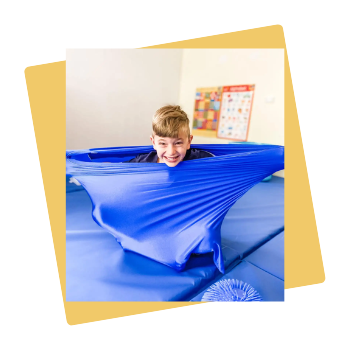 nse of where we are in space, which works together with the vestibular and tactile senses to provide our body scheme and 'felt sense of self'.
You will be guided through a journey to understand and value the impact of the proprioception system on the calming pathways and learn how to best harness this for the benefit of the specific child. This is not a one-size-fits-all sense.
You will discover the connections between all the senses, the role of proprioception and how to assess and intervene. As with the vestibular sense, you will also be able to apply this new knowledge into practice immediately as you will understand how to use the equipment available to you in your setting, and the child's own environment.
Prepare to be 'wowed' but the new evidence.
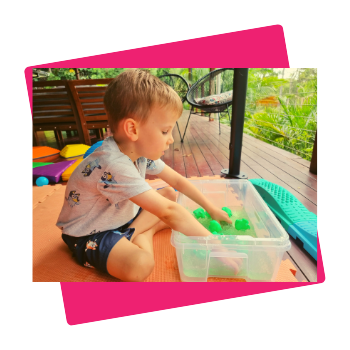
The Tactile system is our body's largest sense organ - it covers the entire body. There are higher density tactile receptors in areas of the body requiring high skill and discrimination like the face, hands and feet. Discover how this, and other neuroscience facts, contribute to our understanding of sensory discrimination and sensory modulation dysfunction of the tactile system.
A particular high point is the sensory representation of our body on our brain as depicted by the 'homonculous'.
The assessment and intervention sections are in many respects things that make such sense but we don't always understand the depth of impact tactile defensiveness has on a child's behaviour nor their potential exposure to sensory trauma. Discover how we can use the neuroscience and polyvagal (Porges) theories to assess and intervene in seemingly simple ways. The potential for positive outcomes for the child is huge and very rewarding.
Dr A. Jean Ayres, the forefounder of Ayres Sensory Integration sadly passed away in the late 1980's before she had done the 'work' she intended to on the auditory system and how this integrates with the other senses.
Historically, the domain of speech pathologists and audiologists, many expert OT's in our time have continued Ayres work and understanding of the contributions of the auditory system to our overall sensory processing and integration.
Mary Kawar and Sheila Frick having made an incredible contribution for OT's to be able to incorporate this all important system into their work with sensory children.
Did you know for example that the vestibular (movement) and cochlea (hearing) systems share a boney labyrinth in the brain, have a shared fluid that runs through both systems and a shared cranial nerve (VIII) for the incoming vestibular-cochlear inputs to travel to the brain. Discover why children with ear infections may appear to be less coordinated and lose their balance more easily!
As with the other systems, you will be guided through pertinent neuroscience, learn 'Therapy Nuggets' of how to apply neuroscience to your practice. You will discover the assessments we can do as OT's as well as the interventions that we can use whilst maintaining our professional boundaries as OT's not Speechies!

Another vital sense, one that many children (and adults) over-use or compensate with. This is an area we OT's know a lot about. We are familiar with assessment for example, eye movements during clinical observations, visual perception, visual motor integration (VMI Beery).
The visual system has a very important role in sensory integration and works particularly closely with the vestibular sense and auditory sense in developing our spatial envelope.
Engaging with the information in this webinar will deepen your understanding of how to 'use' the visual sense in your everyday practice to help a child feel 'safe' in their world.
Perhaps not as 'exciting' as the other senses but certainly some Therapy Nuggets to get your creative therapy brains going.

Smell and Taste! Hugely impactful on eating and feeding and a very emotive piece for parents.
Whilst the information in this webinar does not replace the advice of a doctor, dietician or feeding therapist, insights into the neuroscience behind the olfactory and gustatory systems will contribute to your overall understanding of the contribution of these systems to function. This includes eating and behaviour.
During this exploration, you will learn about the contributions of the gut and other visceral inputs on the smell and taste pathway from the sense organ to the cortex. You will discover how smells can evoke powerful emotional memories. Think about what happens when you smell the perfume you used to wear at a certain time in your life and how you feel when you smell it again years later....

Interoception is related to empathy, decision making, self regulation - in fact without a well functioning 'insular' (the part of the brain where interoceptive inputs are analysed) one may have a lot of difficulty with emotional awareness, reading body states and therefore regulation.
Kelly Mahler is a well known OT for her work in understanding interoception and the contributions it makes to our functioning. She has developed assessment tools since there are no standardised tools available to us. She has also created her interoception curriculum to help support us OT's to support children with difficulties with interoception. Kerry will share some of this information from Kelly Mahler's book Interoception:The Eighth Sense as well as neuroscience from Dr David a leading neuroscientist in this field. Dr Sheila Frick has also contributed to the OT literature and this will also be shared.
Working from an interoception-informed knowledge base can only benefit the children we see and after this webinar, you will hopefully understand why and incorporate some of these strategies into your practice.